· Nadia Rahman
How to use a violin shoulder rest for better posture
Buying the right rest is only half the job. A rest set at the wrong height does as much harm as no rest at all, because it pushes players into the clamping habit that strains the neck. This guide, from years of setting up students, walks through how to actually use one: height, angle, posture and the mistakes to avoid. If you have not fitted yours yet, start with the step-by-step setup guide, then come back here.
What the rest is actually doing
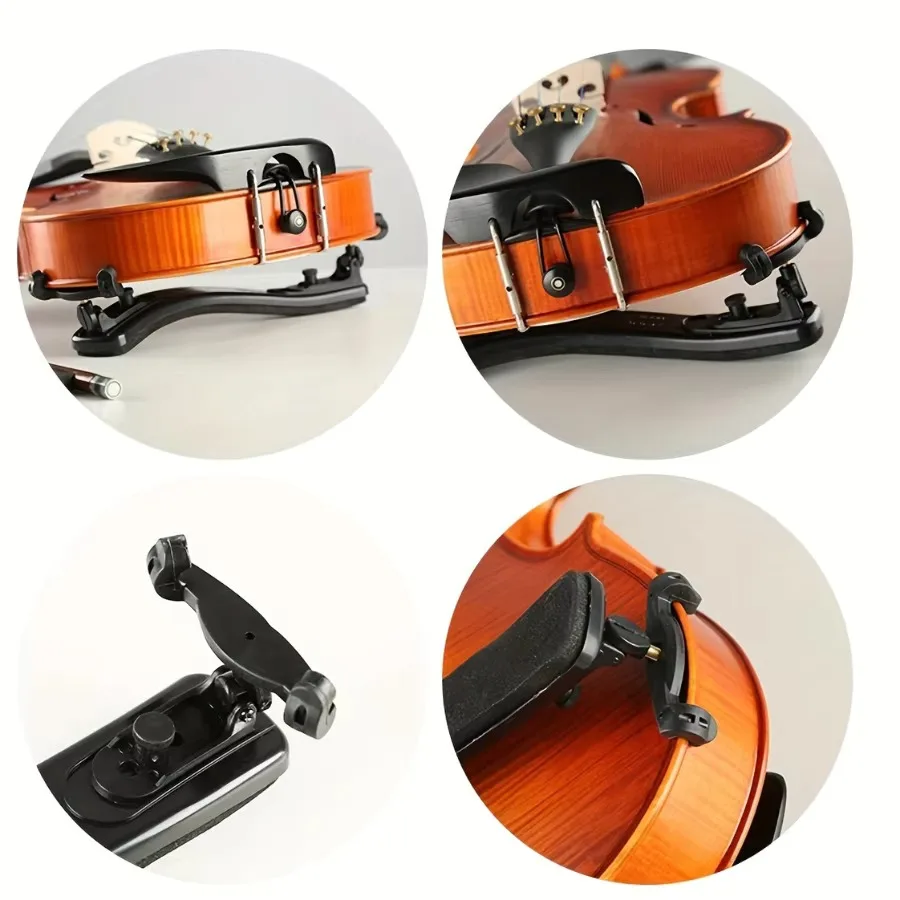
A shoulder rest bridges the space between the back of the violin and your collarbone. Without it, that space has to be closed by your left hand and jaw, which means the hand is partly holding the instrument up instead of moving freely along the fingerboard. With a rest set correctly, the violin is supported from below, your head simply rests on the chin rest, and the left hand is liberated to do its real work. That is the whole point, and every adjustment below serves it.
measured neck-muscle activity and holding force change with shoulder-rest height, confirming the rest is doing real ergonomic work
Setting the height
Height is the setting that matters most. Put the violin on your collarbone, place your chin lightly on the chin rest, and look straight ahead. The violin should already be at your jaw without you dropping your head to reach it or hiking your shoulder up to raise it. If you have to lower your head, the rest is too high. If you have to lift your shoulder, it is too low. On the Cadenza rest the feet pivot to change the span and lift, so make small changes and test after each one. Aim for the setting where your head, once resting, needs almost no downward pressure to keep the violin secure.
| Symptom | Likely cause | Fix |
|---|---|---|
| You drop your head to reach the chin rest | Rest too high | Lower the rest a step |
| You lift your shoulder to hold the violin up | Rest too low | Raise the rest a step |
| Violin slides off the collarbone | Angle wrong or feet loose | Adjust tilt, reseat feet |
| Neck aches after playing | Clamping to compensate | Reset height, relax jaw |
Setting the angle
Once the height is close, the tilt fine-tunes comfort. Everyone's chest and shoulder slope differently, so angle the pad so its whole length meets your body rather than balancing on one edge. A pad that touches evenly spreads the contact and stops the violin from rocking. If the instrument tends to slide toward the floor, tilt the rest so its higher side is nearest your neck. Small changes here make the difference between a violin that sits like it belongs there and one you are always chasing.
Posture and the shoulder
Stand or sit tall, feet about shoulder-width, and let both shoulders hang. Bring the violin to you, not you to the violin. Your head turns slightly to the left and rests, it does not press down hard. The left arm swings under the instrument so the wrist stays straight. When all of this is set up correctly, holding the violin should feel almost effortless, and you can prove it by briefly letting go with your left hand: a well-set rest holds the violin on its own for a moment. That is the balance you are after. Good posture is not just comfort; over years of practice it is how string players protect their necks and shoulders from the strain the research keeps documenting.
prevalence range of playing-related musculoskeletal disorders in string players across studies
— Systematic review, Journal of Manipulative and Physiological Therapeutics, 2018
Common mistakes
Three mistakes come up again and again. The first is leaving the rest at the factory setting and forcing your body to adapt; adjust the rest to you, not the reverse. The second is setting it too high because a tall rest feels supportive at first, when in fact extra height increases the force you need to hold the violin and tires you faster. The third is ignoring a rest that slips, which is almost always loose feet or a size mismatch rather than bad luck; our sizes guide and setup guide both cover the fix. If you are still deciding whether a rest suits you at all, read our honest look at needing a shoulder rest, and if you double on viola, see violin versus viola rests.
Want the rest we set up this way? See the buyer's guide, read real buyer reviews, or learn how we test. You can also read more about Cadenza.
Questions
Where should a shoulder rest sit on your shoulder?
The pad should rest on the soft part of your shoulder just inside the collarbone, not out on the bony point of the shoulder. Set the height so the violin reaches your jaw without you lowering your head or lifting your shoulder to meet it.
Should my shoulder be up or down when playing violin?
Down and relaxed. If your shoulder rises toward your ear to grip the violin, the rest is too low or the angle is wrong. Raise the rest a little so the instrument sits at your jaw naturally, and let the shoulder drop.
How high should a violin shoulder rest be?
High enough to fill the gap between the violin and your collarbone so the left hand does not carry the instrument, but no higher. A rest set too tall increases the force needed to hold the violin and reduces comfort, which studies have measured directly.
Free shipping · 30-day money-back guarantee